 wedding ss
Guest List and RSVP Management: A Practical Guide
From the first rough list to the final seating chart: how to invite fairly, collect replies on time and keep every guest detail in one place.
In this article
- Step 1: write the dream list, then sort it
- Step 2: decide the rules before you tell anyone
- Step 3: collect the details once
- Step 4: choose how guests reply
- Step 5: set a deadline that works for your caterer
- Step 6: follow up politely
- Step 7: record the extra information
- Step 8: turn replies into a seating plan
- A note on privacy
- The last two weeks
The guest list is the part of wedding planning where budget, family and friendship meet, so it deserves a method. A clear process lets you invite fairly, receive replies on time and arrive at the day with a headcount you can trust. These steps work for a gathering of thirty people and for one of three hundred.
Step 1: write the dream list, then sort it
Each of you writes down everyone you would love to see, without worrying about numbers. Then sort the names into three groups.
- Group A: people you cannot imagine the day without, such as close family and best friends.
- Group B: people you would be delighted to invite if space allows.
- Group C: people you would invite only if several others decline.
Compare the totals with your venue capacity and budget. If you must cut, cut group C first and then group B, and avoid making exceptions for individual people, because exceptions are what cause hurt feelings.
Step 2: decide the rules before you tell anyone
Rules that are set early are easy to explain later. Settle these questions together.
- Plus-ones: for everyone, for married or engaged partners only, or for nobody.
- Children: all children, family only, or an adults-only celebration.
- Colleagues: whole team, direct team or none.
- Family contributions: if relatives have special requests, agree on a shared answer.
When someone asks, you can say, "We kept the day small and are only able to invite the people listed on the invitation." Polite, short and the same for everybody.
Step 3: collect the details once
Gather full names, postal addresses, email addresses and phone numbers in a single sheet or app. Add columns for the side of the family, the group, the table preference and any special needs. Keeping one master list prevents the usual mix of messages, spreadsheets and notes on paper.
Step 4: choose how guests reply
The easiest way to reply is the one that takes one minute. A wedding website with a reply form works best: guests choose attending or not, add dietary needs, name their plus-one and leave a message. If part of your family prefers the phone, offer a number and enter their answers yourself. Print the website address and the reply deadline clearly on the invitation.
Step 5: set a deadline that works for your caterer
Ask the venue or caterer when they need the final number, then set your reply deadline three to four weeks before that. A deadline well ahead of the wedding gives you time to follow up and to plan seating without pressure.
Step 6: follow up politely
Some guests will always forget. Use a simple tracker with four statuses: invited, attending, declined and no reply. A week after the deadline, send a short personal message to everyone with no reply: "We would love to know whether you can join us. Could you let us know by Friday?" Calls to older relatives are often more effective than messages.
Step 7: record the extra information
For each attending guest, note allergies, dietary choices, mobility needs, language needs and whether a child needs a seat or high chair. Pass this information to the caterer in one document, and keep it up to date until the last week.
Step 8: turn replies into a seating plan
Start with the fixed groups: your family, your partner's family, friends from school, friends from work. Seat people who know each other together, and mix a few guests who would enjoy meeting. Place anyone with mobility needs near the exit and older relatives away from the loudest speakers. Draft the plan on paper first and test it once the final replies arrive.
A note on privacy
Guest details are personal data. Share the list only with those who need it, such as the planner and caterer, and avoid posting names, addresses or phone numbers in open group chats.
The last two weeks
Confirm the number again with the venue, prepare place cards, and keep a short list of late changes. Illness and travel problems happen, and a calm, flexible plan is more useful than a perfect one.
Wedding Shot Studio brings your guest list, wedding website and RSVP replies into one place, so the final headcount is always up to date.
Frequently asked questions
When should RSVPs be due?
Three to four weeks before the wedding, or at least one week before your caterer needs the final number. This leaves time for polite reminders.
How do I handle guests who bring someone I did not invite?
State the plus-one rule on the invitation and on the website, and answer kindly but consistently if someone asks. A short sentence is enough.
How many invited guests usually attend?
It varies with distance and season. Closer weddings often see 85 to 90 percent attend, destination weddings often fewer. Count only confirmed replies for the final number.

Plan it all in one app.
Checklist, budget, guest list, invitations and your wedding website, together in Wedding Shot Studio.
 Scan to get the appPoint your phone's camera at the code.
Keep reading
Wedding Day Timeline Template You Can Copy
A realistic hour-by-hour schedule for a late-afternoon ceremony, built backwards from the ceremony time with buffers, so the day feels unhurried.
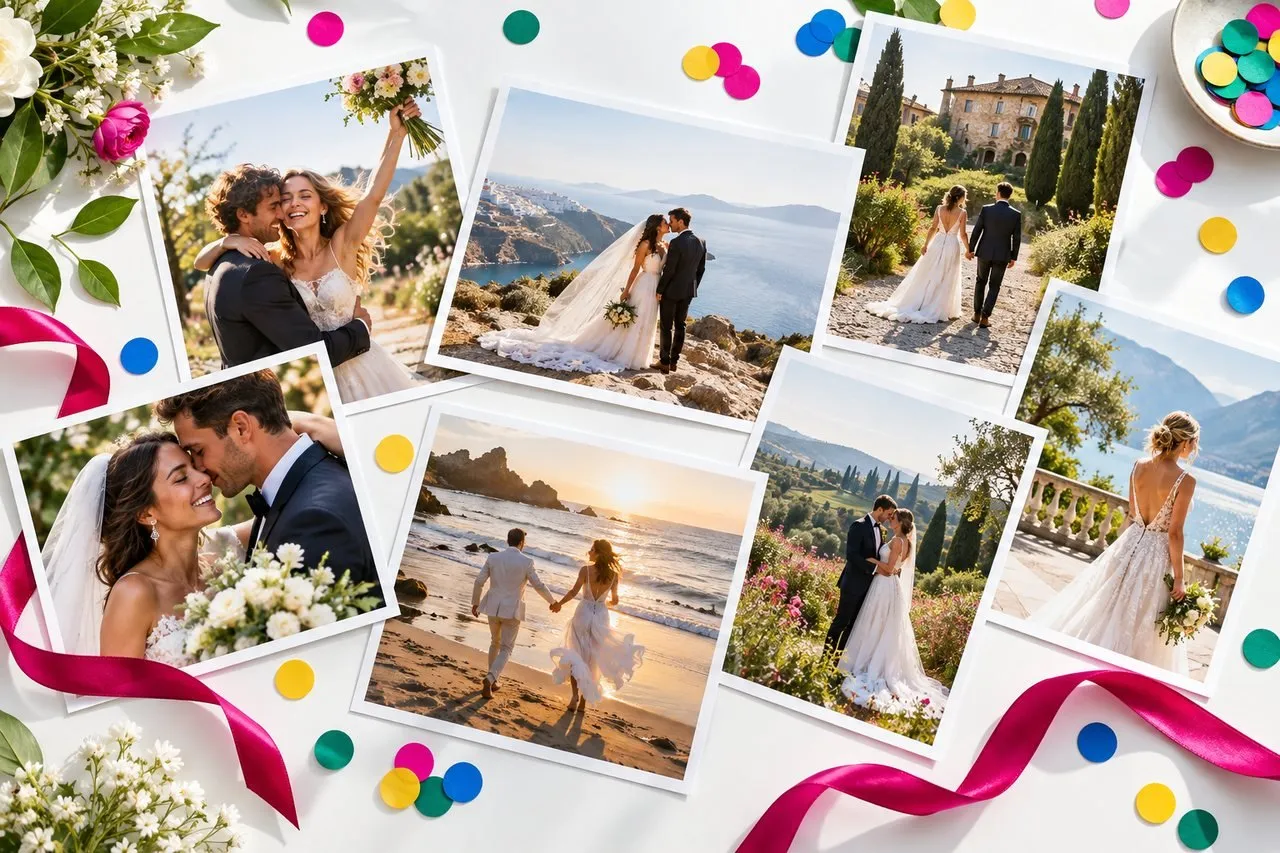
AI Wedding Photos: The Complete Guide to Realistic Results
How do AI wedding photos work, which photo should you upload, and how do you pick a style and destination? A practical guide to realistic results and privacy.

Santorini Wedding Photos: Best Spots, Light and Poses
The best spots in Oia, Fira and Imerovigli, the right hours for soft light, outfit colors that pop against white and blue, and easy poses for Santorini wedding photos.